the setup
In 2020, protests emerged in response to the killing of George Floyd. The entertainment industry began interrogating itself about the dearth of black media content, and the structures that created the gap and, thus, the opportunity.
To meet the moment, Sony Pictures entered into a first-look deal with Jeff Friday Media. Jeff Friday Media (JFM) was a newly formed production house launched by the founder of the annual American Black Film Festival (ABFF). With a growing agenda, Jeff Friday Media also entered into a two-year first-look deal with WarnerMedia, and signed a third deal with Endeavor Content. This flurry of press attention included the announcement of the feature film, Lucid Summer, a screenplay Jeff Friday Media optioned to produce. The Deadline announcement for Lucid Summer boasts a beautiful portrait of Mr. Friday, while it lacks a photograph of the film’s screenwriter or director, Khaled Ridgeway. Across the industry, rumors spread that these announcements fed corporate political needs more than they addressed business opportunities. Mr. Friday runs a lovely festival, but even Oscar-winning producers would struggle to develop a slate whilst also juggling the broad administration of an entire festival. There’s only so much time in the day. We are living in a rapidly changing media climate. Since these announcements, Endeavor Content became Fifth Season, and WarnerMedia was spun-off and its corporate parent is being sold to Paramount. In the six years since all of these announcements hit the trades, Jeff Friday Media has not produced any narrative features. Mr. Friday continues to run a lovely festival.
Mr. Friday’s festival is no small achievement, and its success would not be possible without the leadership of his wife, Nicole. The American Black Film Festival has run for nearly three decades. Martha's Vineyard for nearly as long. In 1992, the Pan African Film & Arts Festival was founded by Danny Glover and some other partners. Five years later, Stacy Spikes founded Urbanworld. These four festivals have assembled the deepest concentration of Black filmmakers, Black audiences and Black tastemakers in the American calendar. Still, these four festivals are missing a market; between them there exists no rights market, no financier matchmaking, and no buyer accreditation.
Structurally, most black film festivals are annually capitalized by corporate sponsors. Warner Bros. Discovery, HBO, Comcast NBCUniversal, Amazon MGM, Netflix, Sony and Starz all put their names on ABFF in 2026. A film festival’s relationship to distributors functions mostly as a promotional and marketing extension. When I had the privilege of attending ABFF in 2022, I was supporting the North American premiere of Freddie Gibbs’ Down with the King, after Sony Pictures acquired the film following its premiere in Cannes. ABFF’s location in Miami has a lot of potential and the broader film ecosystem in Florida is underrated; I experienced this firsthand while appearing on panels as a guest of Sandy Lighterman and Marco Mall in Fort Lauderdale. While ABFF can become the domestic counterpart to a French film premiere, it has a way to go before it can become a domestic counterpart to France’s biggest film market.
This year, on September 11, in an announcement timed to the Toronto International Film Festival, a group of Jewish producers launched a programme, Shooq, that Martha’s Vineyard, ABFF, PAFF, and Urbanworld have not yet built. For reasons I’ll explain in a moment, Martha’s Vineyard may be the festival most poised to replicate Shooq’s ambitions, while PAFF might prove to be the best partner for the American Film Market
Shooq is free and nonprofit. It raises no funds and holds no capital. The way it works is this: funders post profiles stating genre interest, funding range and check size, and even anonymously if they prefer. Shooq curates projects against those profiles and makes introductions, so every negotiation happens off the platform between vetted parties. Ari Pinchot and Jonathan Rubenstein built it. Ben Silverman, Micah Green, Anthony Bregman, Emmanuelle Chriqui and Keshet International joined the advisory board before it shipped.
Matchmaking isn’t new to entertainment; my predecessor at Sony, Fassa Sar, left her executive chair to build Callo, which is a vetted digital membership with collaborative matchmaking technology at the core of its functionality. Membership and matchmaking are the two functions a festival performs for three days a year. Callo performs them continuously on its platform all year round. In the same way that Marché du Film owns Cinando, I anticipate one of these four festivals eventually acquiring Callo to extend their festival footprint in terms of time, scale, and geography.
why affinity capital works
provide advantages that extend beyond purely transactional relationships. Far be it from me to impersonate Nostradamus, but there’s a bevy of economic literature that supports my assumption that Shooq is poised to succeed in ways that the aforementioned first-look deals did not. This is an observation less about personalities and competency, and more about the context of where incentives live.
William Kerr and Martin Mandorff, in the Journal of Human Resources in 2023, identified how sector-specific business knowledge moves through social interaction among , at family gatherings and religious functions rather than in classrooms, and it produces enormous concentrations: Koreans are thirty-four times over-represented in dry cleaning, Gujarati Indians eighty-four times in motel management. The mechanism is know-how moving along ties that already exist.
Commodities have a grade and a spot price. have neither, so the buyer must find the right seller and then trust the seller once found. These somewhat anomalous economic effects are concentrated in goods that economists classify as : industries where there is weak enforcement, unobservable quality, and a reliance on relationships.
James Rauch and Vitor Trindade measured how ethnic Chinese business networks impacted international trade. The effect was large and it concentrated in differentiated products rather than commodities, raising bilateral trade in differentiated goods by nearly 60% percent on their conservative estimate. Rauch and Trindade credit ethnic business networks with solving both, as networks function as both a search technology (where the diaspora is large) and an enforcement technology (where it is small).
A screenplay is a maximally differentiated product. Its quality is not fully observable to the buyer, its price is imperfectly observable to the seller, and its value is unknown to anyone until eighteen months after the cost is incurred.
In 2014, Management Science commissioned Deepak Hegde and Justin Tumlinson to study 22,000 venture partners and 85,000 startup executives. They found that co-ethnic matches between investors and founders produced better outcomes: higher probability of acquisition or IPO, higher net income after listing. Their instrumented estimates locate the gain in post-investment communication and coordination. The striking finding is what investors were willing to trade for it. Co-ethnic VCs knowingly backed ventures of lower observable quality, expecting the working relationship to more than compensate, and the returns vindicated the trade.
George Akerlof and Rachel Kranton explained the participation. Their 2000 paper put identity into the utility function, so acting in accordance with a group self-conception pays directly, and people accept returns that material calculation alone cannot predict.
why the capital does not arrive on its own
is rational inference about an individual from group averages when the individual cannot be observed. It requires no animus and produces the disparity anyway. Where project quality is genuinely unobservable and past performance genuinely does not predict, a financier is working entirely from priors, and priors about who returns capital are priors about who was given capital. To the extent the gap is statistical, information is the fix, because a signal displaces a prior. Screening is what makes a prior unnecessary, and requires nobody's goodwill. Moving beyond the affinity ecosystem, and Callo’s matchmaking service, let’s think about what Slated built.
what slated built
Slated has been running an version of this architecture since 2012. Its track record is not slight, as the platform carries roughly 60,000 members, including some 30,000 producers, and around 2,000 . Roughly 2,000 new projects list annually. Deadline reported in October 2022 that The Kill Room, The Inventor with Marion Cotillard and Daisy Ridley, Our Son with Billy Porter and Luke Evans, and Hazard with Alex Roe and Sosie Bacon were all co-financed through Slated's .
The Kill Room is where Slated entered my field of vision. Samuel L. Jackson and Uma Thurman, together for the first time since Pulp Fiction, in a film directed by Nicol Paone. Sitting on an acquisitions desk, a reunion like that is the kind of package you look at closely.
Slated entered into , Bleecker Street signed a multi-year arrangement in 2022 giving it first access to high-scoring films in Slated's pipeline. Roundtable Entertainment also signed a multi-picture financing and production deal that Deadline described as the first output deal for an online film marketplace.

Leah Veneziano's 2024 Fordham thesis compared 83 completed Slated films against 344 studio releases from Universal, Warner Bros., Paramount, Disney and Columbia between 2015 and 2023. Slated films scored 62 percent with critics against 60 percent for the studio films, and 65 percent with audiences against 69 percent. Independently financed films at a fraction of studio budgets, are capable of reaching parity in terms of reception.
Slated's output deals are worth one more comparison. An output deal works because a distributor trusts the scoring enough to commit before knowing which specific film clears the bar, a data business wearing a financing costume. Letterboxd is a data business that has started wearing a distribution costume. Letterboxd sold a majority stake to Tiny in 2023 at a valuation reported north of fifty million dollars, and by this spring Tiny was shopping that stake to Netflix, Sony, Paramount Skydance, Versant, TPG and RedBird, a sale still open as of this writing. In December 2025 Letterboxd launched a transactional video store in twenty-three countries, curated in part from its members' own watchlist and ratings data, with a shelf called Unreleased Gems surfacing festival films with no U.S. distributor. One of them, It Ends, picked up a distributor, Neon, shortly after.
callo and the sorting problem
Michael Kremer's models production where quality multiplies rather than adds. Small differences in individual quality produce large differences in finished work because errors compound instead of averaging. Liyuan Wei and Yupin Yang took this directly to film. Their 2022 study built a structural two-sided matching model of producer and director pairing across 4,807 films released between 1990 and 2010. They found social relations facilitating , and they put a number on what mismatched director-project pairings cost.
This is the problem Callo is built against. In theory good pairs with good, but in practice you pair with whoever you can find, and who you can find is a function of which school you attended and which rooms you have been admitted to. in this business is not a small tax. It determines the package, and the package determines everything downstream, because no amount of efficiently matched capital repairs a project that was mismatched at conception.
Callo's approach is a with matching that weighs creative characteristics rather than keyword overlap. Callo’s concept is correct regardless of who executes it, and the festivals are the institutions with the most to lose by ignoring it, because a continuous digital membership performs year-round what a festival is expected to deliver in merely four days.
the empty square in america
There is no Shooq for Black, brown or female filmmakers. What exists falls into three categories that do not connect coherently. There’s no shortage of jobs databases in entertainment. While many programs connect a person to employment, none connects a project to capital.
There are three leading black funds on the radar of black creators. MACRO, which raised $90 million in 2023 from BlackRock Alternatives, HarbourView, and Impact Partners, which has financed more than 150 documentaries and describes itself as a fund bringing investors together with filmmakers. These institutions take positions, internalizing the transaction rather than facilitating it. The Women in Film Financing Intensive has the right architecture, pairing preparation with meetings against outside financiers and holding no capital itself, but it runs as a cohort with an application window and the most recent cycle I can locate closed in February 2023.
Nothing occupies the square Shooq occupies: free, identity-aligned, introduction-only, holding nothing.
sundance has run a matchmaking program for thirteen years
Sundance Catalyst is the Institute's financing arm and has operated since 2013. Roughly forty-five vetted investors meet eight to ten curated projects across three days. The Institute constructs the introductions, so neither side browses. Filmmakers work through a preparation track from January to March. Investors work through a separate education track. The program reports facilitating more than $60 million across more than 150 features, with grants between $10,000 and $100,000 and equity between $25,000 and $1 million.
This architecture solves two problems. Vetting both sides produces with . Capping at eight to ten projects makes evaluation feasible, since forty-five investors confronted with four hundred projects will retreat to the two a friend mentioned. Alvin Roth, whose 2012 prize covered exactly this class of problem, built the medical residency match on the same two principles.
Europe has run a similar programme for decades. Rotterdam's CineMart takes twenty to 25 projects a year by invitation and states plainly that it is not a fund. The Berlinale Co-Production Market took 35 projects in 2026 and mails participants a pre-loaded schedule. Similarly, Tribeca's Creators Market runs 40 projects by invitation. None of them deploys capital, they merely manufacture scheduled proximity with a quality floor.
a potential future
Martha's Vineyard draws 2,000 people, runs an Oscar-qualifying shorts competition, hosts a C-Suite Summit, and in a given August seats former presidents, sitting justices and studio chiefs within a few hundred yards of each other. There’s potential here. Beyond matchmaking, the matter of a market catering towards black and brown filmmakers remains. It would be a mistake to create a segregated market; but it would be advantageous to improve and reinvigorate an existing one. Let us consider a world where the American Film Market, which currently lacks a festival component, was acquired by the Pan African Film Festival.
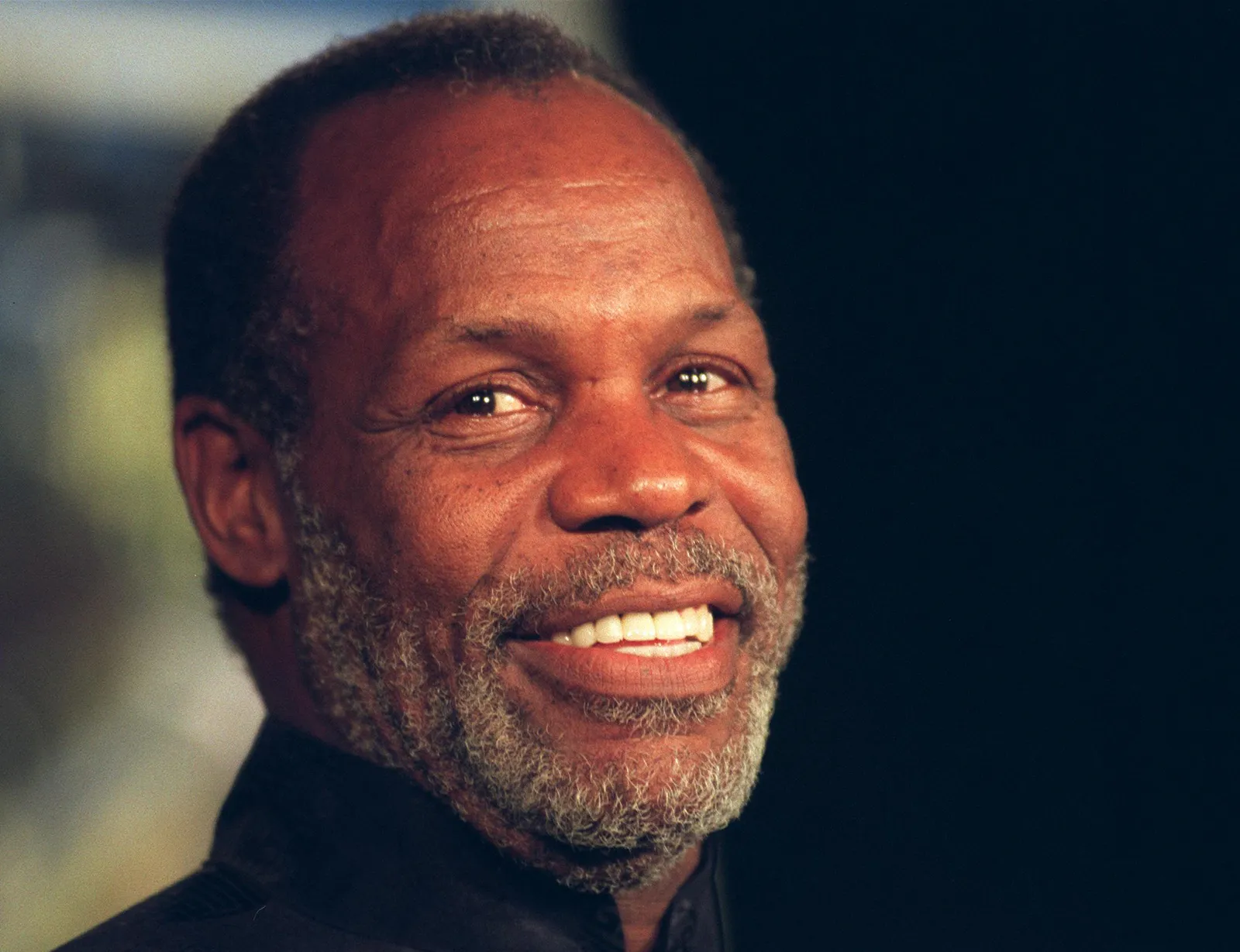
The Pan African Film Festival boasts a rich history, sporting Danny Glover as one of its cofounders. Its Los Angeles location provides PAFF a proximity to buyers that ABFF (Miami), Urbanworld (New York), and Martha’s Vineyard (Massachusetts) lack. This proximity makes PAFF an ideal buyer of AFM. However, this transaction should be engineered by an investment bank (like HarbourView) in partnership with a syndicate of family offices, and not by a festival's marketing department. Market design is a financial discipline and festival staff who are excellent at programming have no reason to share those capabilities.
AFM has occupied three different headquarters in three consecutive years. When IFTA moved it to the Palms in Las Vegas in 2024, leading American sales companies told the association they would not return and would set up their own market in Los Angeles if forced. Allegiance to a market is portable. IFTA reversed and came back to Century City. A new chief executive, Jackie Brenneman, took over in February 2026, and this year's edition carries the first themed positioning in the market's history.
While Stuart Ford was lambasting Vegas to thunderous applause, Toronto built a new market. TIFF launched with support from the Canadian government, described by TIFF as the largest public investment it has received since the Lightbox campaign. Stephen Follows, working from Cinando registration data, counted 3,377 companies registered for Toronto this year, up sixty-three percent, and found that thirty-two percent of them are AFM regulars. AFM is the outlier among global markets because it is the only major one not attached to a festival of comparable stature. Cannes has Marché, Berlin has EFM, Toronto now has a market. AFM’s current structural weakness is an opening: the asset is the loyalty of the sellers, but the sellers can walk.
The best thing, at the moment, that AFM has going for it is the calendar. It is the last major market of the year. AFM is the last market buyers have to take seriously before leaving for Christmas break. One of the last things that buyers do before Christmas is take a temperature of what’s going to premiere at Sundance. But while Sundance will debut new fresh voices, only a few of the films there will prove commercial, given the festival’s predilection to amplify underrepresented (marketers read ‘niche’) narratives. As a matter of consequence, then, the Christmas break of most buyers is spent tracking the packages that producers and agents will be debuting after Sundance, in Berlin.
The schedule for the four major black festivals usually follows this part: PAFF kicks things off in February, usually a week before buyers leave for Berlin. ABFF lands in May, where the locals will tell you that, “It gets a lot busier in the wintertime, but it’s just so hot out here, right now.” Three months later, the elite flee to Oak Bluffs for Martha’s Vineyard in August. Then, there’s Urbanworld, which takes place in New York in October.
Of these four festivals, only Martha’s Vineyard has carved out an irreplaceable niche for itself. Given PAFF’s location in Los Angeles, and an etymological mandate that speaks to a global mission, one could argue that ABFF and Urbanworld as a combined entity would better cater young black artists. Nice Crowd, Jeff and Nicole Friday's company, already runs ABFF as one property among several: ABFF Honors, ABFF London, ABFF Pop Up, and a comedy festival called Because They're Funny. Urbanworld remains independently run by its founder, Stacy Spikes, through the nonprofit Urbanworld Foundation, thirty years old this year. Both organizations sell sponsorship to the same short list of buyers. HBO backs both. Warner Bros. Discovery backs both. Two sales teams are pitching two decks to the same media companies for two events months apart. That redundancy has a cost. There is a bandwidth argument too, the same one this essay already made about Jeff Friday and his production ambitions. Spikes runs Urbanworld while also serving as chief executive of the relaunched MoviePass and, this year, is launching Mogul Fantasy League, a hundred-million-dollar fantasy-entertainment platform that happens to sponsor Urbanworld itself. No merger talk exists in the trades, I am merely proposing one here, as an investment case rather than a cultural one. But such arguments are not the focal point of this essay.
ABFF will move to Los Angeles in May 2027, which puts it inside the capital of entertainment. However, its dating proximity to Cannes’ market (usually the second week of May) means it's a poor candidate for partnering with AFM (despite the potential for a complementary acronym between two of them).
Let’s make an argument for the Pan African Film & Arts Festival partnering with AFM. Now, instead of the year’s first major film market taking place in Berlin, it would move to the United States a week after Sundance. In some respects, AFM would be directly competing with the Berlin market; but in most respects, AFM would not. Being in Los Angeles means AFM and PAFF are largely undeniable already, and Potsdamer Platz in the wintertime is not the loveliest experience. The footprint of the existing PAFF means AFM is plugging itself into a marketing apparatus that already exceeds whatever IFTA is accustomed to. Going further, this iteration of PAFF, emboldened with a new market, would be supported by a bank and a family office syndicate, running a Catalyst-style matchmaking program inspired by Shooq's affinity architecture. If PAFF wanted to scale its matchmaking efforts, acquiring or integrating Callo's continuous membership would easily facilitate this.
One more case study, from a culture industry that got here first. Endeavor took a 70% stake in Frieze, the art fair company, in 2016, folding a curatorial, prestige-driven event into a portfolio built around premium experiences. In 2025, after Endeavor went private in a $13 billion buyout, Ari Emanuel bought Frieze back personally. The terms of the acquisition were not disclosed, but the deal is valued at around $200 million. Emanuel folded Frieze into a new holding company, MARI, which by the end of the year had also acquired IMG's tennis stops in Miami and Madrid, majority control of Barrett-Jackson, IMG's arts and action-sports portfolio, and TodayTix. The stated goal is a global portfolio of cultural, lifestyle and sporting events, assembled the same way this essay has argued a Black film festival and a film market should be assembled: not by the festival's own programming department, but by capital that understands that live cultural events and conferences are a meaningful category.
We have everything we need. The literature on why affinity capital works; the precedent of platforms like Slated; matchmaking examples like Shooq, and the data to support further investments into the festival space. A capital class is already circling adjacent culture industries with this playbook, so what is missing is not a case, study or a mechanism. What is missing is someone willing to make the first call.